

EVERY ESTATE PLAN IS A LAWSUIT WAITING TO HAPPEN WHY EVEN A PERFECTLY DRAFTED WILL CAN FAIL — A MALAYSIAN LITIGATION LAWYER’S PERSPECTIVE
EVERY ESTATE PLAN IS A LAWSUIT WAITING TO HAPPEN WHY EVEN A PERFECTLY DRAFTED WILL CAN FAIL — A MALAYSIAN LITIGATION LAWYER’S PERSPECTIVE

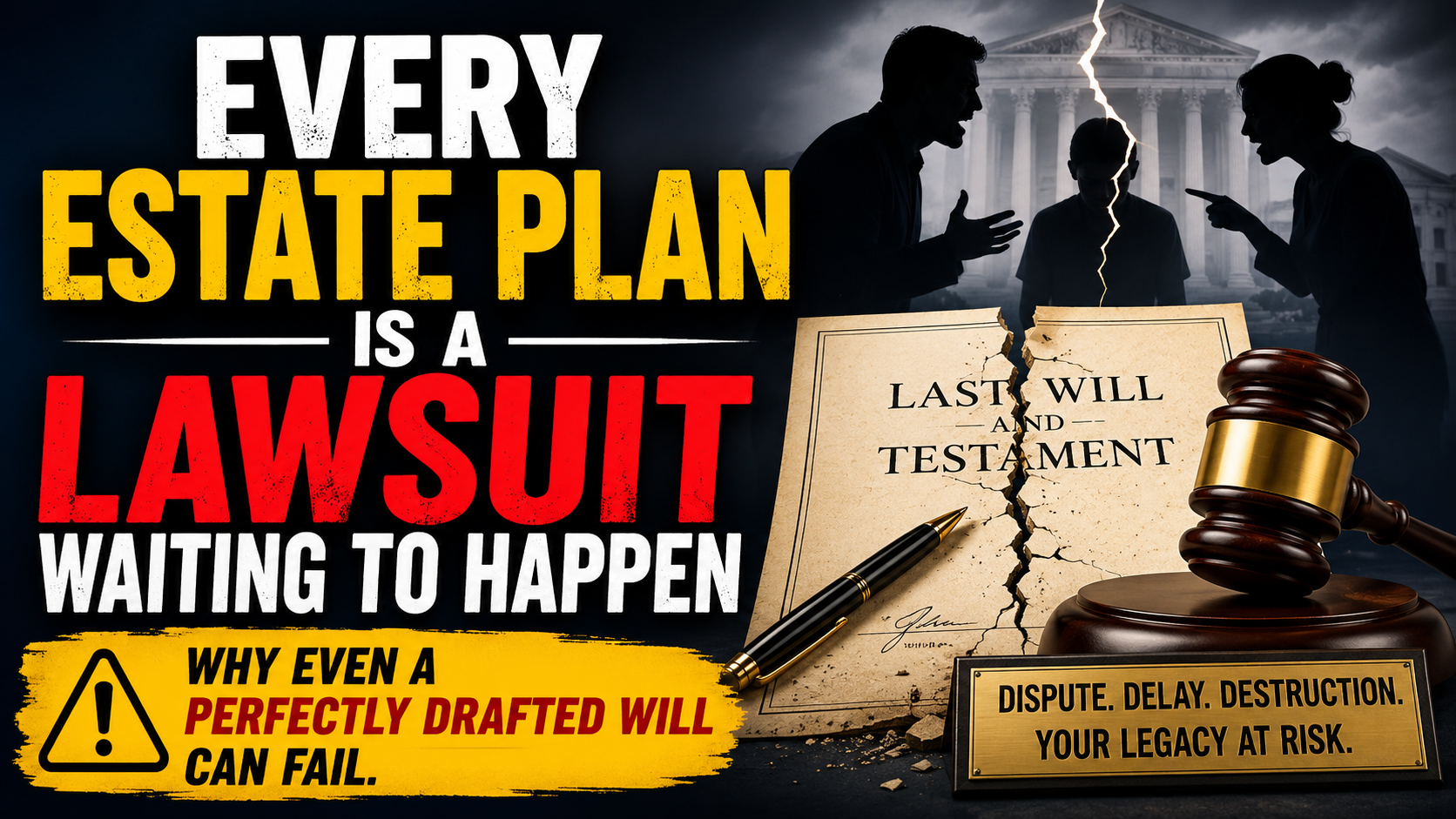
A plan is drafted, signed, paid for, and filed away — and everyone treats the matter as closed. Then the testator dies, and the carefully crafted structure quietly fails to execute as intended. It is a silent crisis, sitting dormant until the day someone challenges it.
In my years as a litigation lawyer handling estate dispute, I’ve witnessed an uncomfortable truth that many legal practitioners don’t discuss openly: even the most meticulously drafted wills can become spectacular failures. Today, I want to share the harsh realities I’ve observed and the practical solutions that can prevent your clients’ estate plans from becoming courtroom nightmares.
The Fundamental Misconception
The biggest misconception everyone has is that wills automatically execute themselves. The reality is they don’t and never will. A will is merely a document expressing intentions. without proper execution by competent people it becomes worthless paper. This is where the overwhelming majority of estate planning failures originate — not in the drafting, but in the execution. Plans do not fail on paper. They fail in real life.
The reason is simple. Death does not carry out the plan, and the one person who knew the true intention behind it is gone. From that moment the testator has zero control, and everyone left behind has more. Every gap in the structure becomes a litigation opportunity. An estate plan is not successful because it was signed; it is successful only if it survives a lawsuit.
The Executor Crisis : The Illusion of Control
I’ve seen perfectly valid wills rendered useless because executors simply refuse to act. The reasons are consistently predictable: overwhelming costs, legal complexity, and zero compensation. When the primary executor renounces, families scramble for alternatives, often settling for unqualified individuals who cannot handle a complex estate.
But the deeper problem is the illusion of control. A client’s wishes in a will are guidance, not enforcement. In practice, executor discretion frequently supersedes the testator’s original intention. Worse, an executor can be removed by the court altogether — where there is a conflict of interest, where there is hostility with the beneficiaries, or where the executor fails to administer the estate at all. Every month of delay freezes the estate while assets deteriorate. If a structure depends on people behaving nicely after the death, it is already broken.
Family Warfare: When Blood Becomes Thicker Than Law
The most heartbreaking cases I handle involve families destroying themselves over inheritance. Siblings fighting siblings, children battling parents, extended family members emerging from nowhere with claims. Money has an extraordinary ability to reveal the worst in human nature, even if it is the closet family member.
Once a challenge is mounted, the burden shifts to whoever is defending the will, and the litigation itself drains the very estate everyone is fighting over, and parties might need to spend few years in the court to fight the dispute. No one plans to fight — but almost everyone does when money is involved
The Cross-Border Nightmare
A Malaysian will, and a Grant of Probate issued by the Malaysian court, do not automatically reach across borders. Therefore, the family must apply to reseal it or obtain a fresh Grant in each foreign jurisdiction. This simple fact creates massive complications for families with overseas properties, investments, or businesses.
Each country has different succession laws, tax implications, and procedural requirements. What seems like a straightforward estate in Malaysia becomes a multi-jurisdictional legal maze costing tens of thousands in international legal fees.
Everyone, mostly, always ignore this at the planning stage. It is precisely where the worst delays happen — two to five years is common — while a Singapore property or an overseas portfolio sits paralyzed pending separate proceedings.
Liquidity Disasters
Here’s a scenario that keeps me busy: a testator leaves a RM2 million house but dies with RM1.5 million in outstanding debts — a housing loan, credit-card balances, and the etc. Debts must be paid first; only what remains (if any) becomes assets for the beneficiaries.
When an estate is insolvent, with liabilities exceeding assets, the executor must stop all distributions to beneficiaries and pay creditors in a specific legal order. The executor is not personally liable for the debts, but is responsible for administering the estate properly (and will be found liable if fails), which often forces the sale of assets — at unfavourable prices — to repay creditors proportionally. The position becomes far worse where property is jointly owned, or beneficiaries refuse to cooperate with a necessary sale.
Legal Attack Points
As a litigation lawyer, I know exactly where a disgruntled beneficiary will aim. The most common grounds include undue influence, lack of mental capacity, improper execution, a second spouse, fraudulent documentation and etc. To these I would need to add ambiguity — clauses that create confusion rather than certainty — and clauses that are simply unreasonable.
I’ve seen cases where a single suspicious witness signature triggers months of litigation, or where allegations of mental incapacity require expensive medical expert testimony to resolve. My working test is blunt: if I can attack a will in five minutes, it will not survive court.
The Minor Child Complication
Estates involving children under 18 carry their own danger. Minors cannot receive or control assets directly, requiring court-appointed guardians and ongoing judicial supervision. Without proper guardian appointments, estates can remain frozen for years and the only solution is, go to the court and let the court to decide what it deems to be a suitable arrangement for the minor.
Hidden Surprises: The Real Problem Is Secrets
Nothing surprises me anymore. I have handled cases involving secret families, undisclosed overseas assets, hidden debts, and business partnerships that were never properly documented. I have come to believe the real problem is not distribution — it is secrets. No one tells the whole and full and frank truth during planning; everything comes out after death.
What actually explodes is a recurring cast: second families and marital complexities, children from different marriages or relationships, assets held quietly under nominees or trusts, and overseas accounts or private arrangements no one mentioned while the client was alive. These post-death revelations can derail even a well-planned estate.
The Residuary Clause Solution
One critical element many overlook is, the residuary clause — the provision that decides what happens to everything the testator forgot, and everything acquired after the will was drafted. It is the most powerful line in the document and the testator most often miss: new assets acquired later, new investments, forgotten accounts, overseas assets, refunds and insurance proceeds.
Without it, those unlisted assets fall outside the will and are distributed by law rather than by intention — a partial intestacy. The result is a partial failure of the will, family arguments over what “was meant for me”, court involvement, extra cost and delay, and an executor left stuck.
Practical Prevention
Based on my litigation experience, I recommend several preventive measures. First, choose corporate executors for complex and high value estates – so the administration does not depend on personal relationships or goodwill. Second, address potential and complicated family conflicts directly in the will, explaining reasoning behind decisions. Third, ensure adequate liquidity for debt settlement and administrative costs.
Insist on protection where the facts demand it. For elderly clients, require a contemporaneous medical report. For complex scenarios — a second family, or major changes to a long-standing plan — document every reason and verify the facts before proceeding.
Most importantly, regularly review and update wills as circumstances change. A will that made perfect sense ten years ago may be completely inappropriate today.
The goal was never simply to produce a legally valid document. It is to ensure the client’s intentions are actually carried out, without destroying family relationships or draining the estate through avoidable litigation. Prevention is always cheaper than the courtroom. An estate plan is not successful because it was signed; it is successful only if it survives a lawsuit.
About the Author: Carmene Tan

Carmene Tan Jia Wen is a legal practitioner at Tan Norizan & Associates, one of Selangor’s largest full-service law firms, with experience in arbitration, civil litigation, corporate and commercial disputes, land and property disputes, estate administration, family law, intellectual property, and cross-border legal advisory between Malaysia and China. She is dedicated to delivering practical and results-driven legal solutions while helping clients navigate complex legal matters, including dispute resolution, corporate advisory, estate administration, and cross-border legal issues.
About the Author: Carmene Tan Jia Wen